Switch a ceiling fan on after a few months of neglect and the room gets a small weather event: a grey drift of dust falls from the blades, settles on the bed or sofa, and sometimes lands in someone’s eye. The same fan was meant to move air. Instead it has been storing dust on top, where nobody can see it, until the first spin shakes it loose.
Light fixtures behave in a similar way, only more quietly. The bowl of a flush-mount fixture fills with dead insects and a grey film, a pendant shade collects dust along its upper rim, and a chandelier takes on a dull look that is hard to pin down. These are the jobs people postpone because they need a ladder, which is why they tend to fall outside everyday cleaning services and go undone for a year or more.
Good results come from catching the dust instead of knocking it loose, and from dealing with the electrical and height risks before the cloth comes out.
Why Dust Clings to Blades and Glass
Fan blades don’t just collect dust; they hold it. As the blades turn, air moving over the surface leaves a thin film of fine particles on the leading edge and top face. In a kitchen, cooking grease mixes with that dust and forms a tacky layer that grips tighter every month. In a bedroom the mix is lint and skin particles, which is lighter but still builds into a visible blanket.
Light fixtures hold dust for a different reason. Warm bulbs create small air currents that draw dust upward, and static on glass and plastic shades attracts the rest. Enclosed bowls trap whatever gets inside, including insects that come in through gaps around the fixture. Exposed bulbs and decorative arms gather dust along every horizontal surface.
That is why a dry feather duster is the wrong tool. It flicks fine particles into the air, and they settle on whatever is below. A pass with a duster often leaves the room dustier than it was before.
Make the Job Safe Before Starting
Turn the fan or light off at the wall switch, and if you can, at the breaker as well. Let bulbs cool fully, because even LED fixtures can have warm housings and incandescent bulbs stay hot for several minutes. Never clean a fixture that is on.
Use a stable step ladder, set on a firm, level floor, and keep your body inside its rails. A chair, a stack of boxes, or a stool on a bed is not a substitute. If a second adult can steady the ladder, ask them. Move the ladder rather than leaning out sideways to reach the far blade.
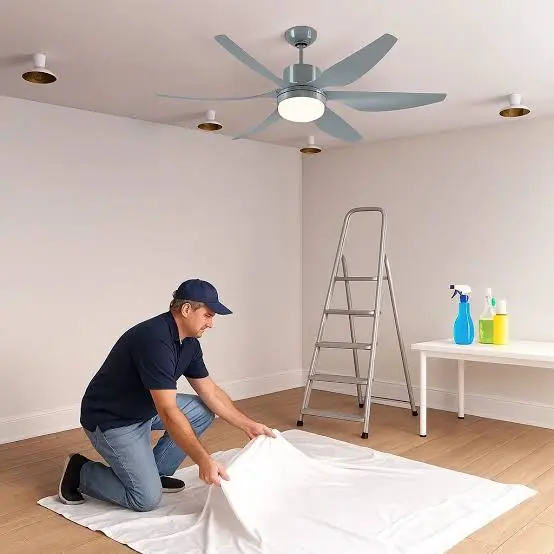
Cover the furniture and floor underneath with an old sheet, and keep pets and children out of the room. Check that bulbs are screwed in tightly before you wipe, since a loose one can fall.
Anything that looks wrong, such as scorch marks, a flickering light, a loose canopy, or a fan that wobbles badly, should wait for an electrician. Cleaning won’t fix a wiring or mounting fault, and cleaning services shouldn’t be expected to work around one.
The Pillowcase Method for Fan Blades
The simplest way to avoid a shower of dust is to enclose each blade as you wipe it. Slide an old, clean pillowcase over a blade so the open end reaches the motor housing, press it lightly on both sides with your hand, and pull the case back toward you. The dust stays inside the fabric instead of drifting down. Shake the case outdoors, or turn it inside out and wash it afterwards.
For a sticky blade, as in a kitchen, dampen the inside of the pillowcase slightly with a mix of warm water and a drop of dish soap, then follow with a dry cloth. A greasy blade is not a job for a single dry wipe, whether the household or CJS Cleaning Solutions is doing it, because the damp pass is what lifts the film. Avoid soaking the blade, because wood and veneer can warp and the motor should never get wet. A microfibre cloth works on a blade you can reach without a pillowcase, but support the blade underneath with your other hand so the fan arm doesn’t bend. Bent blades make a fan wobble, and a wobbling fan throws dust and strains the motor.
If the fan has a light kit with glass shades, take the shades off while the power is off, carry them down, and wash them in the sink. The bowls of flush-mounted fixtures can go in the same warm, soapy water. Dry everything before replacing it. Wipe the motor housing and the downrod with a barely damp cloth, and don’t spray cleaner directly onto the fan, because liquid can run into the motor and light sockets.
Different Fixtures Need Different Handling
Flush-mount and semi-flush fixtures are the easiest. Remove the cover, empty out the insects, wash the cover, and wipe the base plate lightly. Make sure the cover is completely dry before it goes back, because trapped moisture can leave spots and shorten bulb life.
Fabric and paper shades need a dry approach. Use a soft brush, a lint roller, or a vacuum with a brush attachment on low suction. Water can leave marks or loosen the shade’s glue.
Pendants with open glass shades can be wiped in place if the cord is secure, but heavy ones are easier to remove. Hold the shade with both hands over a towel in case it slips. Where a pendant hangs over a stairwell or a high ceiling, the job often goes to cleaning services charlotte nc homeowners hire, since a ladder set up on stairs is a poor arrangement for anyone.
Chandeliers take more time. Crystal and glass drops can be wiped with a lightly dampened microfibre cloth, one piece at a time, and dried with a second cloth. Fixtures with dozens of small pieces take long enough that it’s worth raising them with CJS Cleaning Solutions ahead of a visit rather than assuming they’re part of the standard job. Antique or lead-crystal pieces may need a specialist, and none should be hosed or sprayed.
Recessed lights and track lighting need only a dry or slightly damp cloth on the trim and lens. Keep it out of the socket.
Cleaning Up and Keeping It Away
When everything is dry, put the shades and bulbs back, restore the power, and run the fan on low for a short while to see whether it settles. Fold the sheet with the dusty side inward and shake it outdoors.
How often to repeat the job depends on the room. A kitchen fan near cooking benefits from a wipe every couple of months, and a bedroom fan can often manage with a pass every season. Light fixtures can wait longer, though a bathroom fixture that collects steam and soap haze may need attention sooner. Between visits from cleaning services, a gentle pass with a long-handled microfibre duster from the floor helps, as long as it traps the dust rather than flicking it.
Ask whoever handles your regular cleaning, CJS Cleaning Solutions included, whether ceilings and tall fixtures are part of the visit, because high work is often listed separately. That avoids the assumption that someone else has been doing it all along.
Keeping the Ladder Work Manageable
Ceiling fans and light fixtures stay clean longest when the dust is trapped, the power is off, and each surface gets a method that suits it. A pillowcase for the blades, warm soapy water for removable glass, and a dry touch for fabric shades cover most of what a home contains. If a fixture is awkward to reach or very delicate, leave it for someone with the right equipment, and describe the fan and its fixtures beforehand so nothing is damaged. Keep a clean pillowcase and a stable step ladder together in the cupboard, and the next fan clean takes ten minutes instead of becoming a job nobody wants.
Also Read
- What Does ICIC Mean in Text? Meaning, Examples, Uses & More
- Common Myths About Criminal Defense Lawyers and What You Should Know
- What Does MHM Mean in Text? Meaning, Uses, Examples & More