
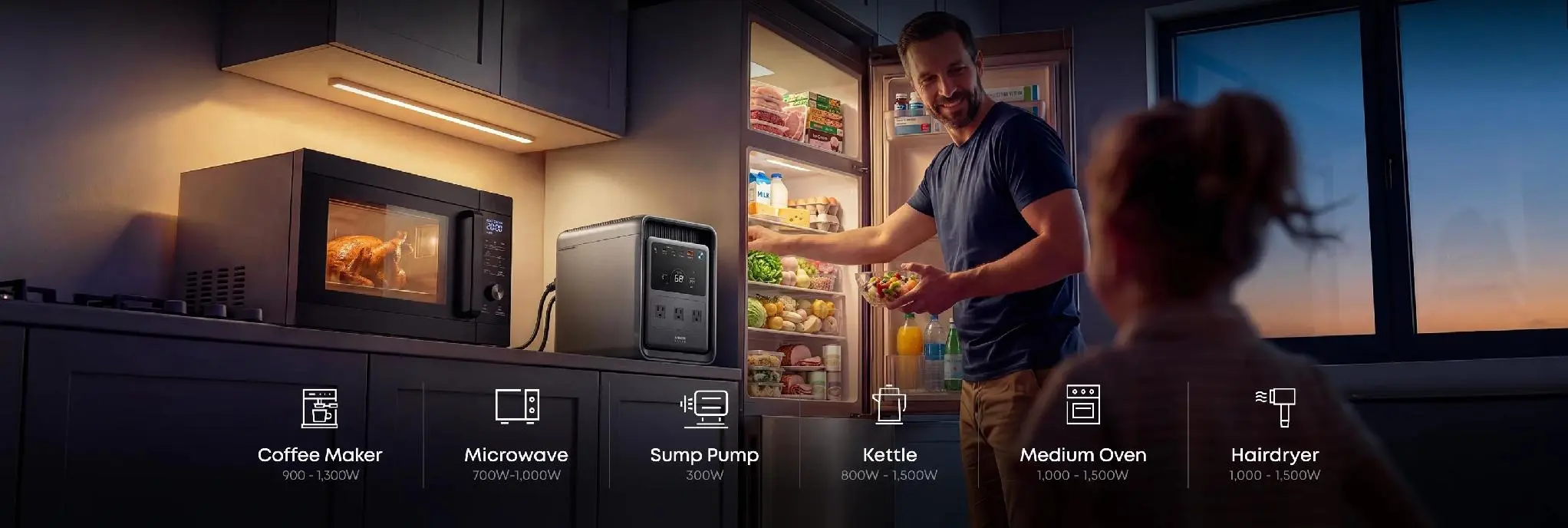
After a hurricane the fridge becomes the clock the household lives by. A full fridge holds cold longer than a half-empty one, and a freezer longer than either. Everything else can wait a day; food cannot, and the decision to keep or discard is made under pressure. A fridge holds cold for a fixed number of hours, and backup power buys more only if it is sized for the compressor. Two hours of uncertainty is the difference between a full freezer and a bin bag. A thermometer removes the uncertainty. The aim here is to set out the hold times, the ways to extend them and the point at which food should go.
Refrigerator Runtime
Closed-Door Hold Times
A closed fridge holds temperature for about four hours; a closed freezer holds for twenty-four, or forty-eight if it is full. Those numbers assume the door stays shut, which is why the first rule is to know what you want before you open it. A fridge thermometer takes the guesswork out of the later decision and costs less than the food it protects, and taping it inside the door lets you read it through the glass without letting cold out. Keep two, because fridge and freezer fail at different rates. Do not open the door to check; open it to take something out, and know what before you pull. Two readings a day are enough to know whether the cold is holding or going. A thermometer that reads both the air and the milk is the only one worth buying.
Freezer vs Fridge Timelines
The freezer is the better cold store, so move what you can into it before the storm. A full freezer is a thermal battery: the more solid mass inside, the slower the rise, and the gap can be packed with bottles of water rather than left as air. A freezer emptied every August and filled every October behaves differently from one nobody touches, and only the owner knows which it is. Move ice cream to the middle and meat to the bottom, where the cold pools. Pack the gaps with frozen bottles rather than leaving air, since air is what warms first. Knowing hurricane categories how do they work is less useful here than knowing your own appliance.
Extending Cold Storage
Ice and Gel Pack Rotation
Freeze bottles and gel packs in the days before landfall, and use them to fill the gaps in the fridge once the power goes. Rotate them from the freezer to the fridge as they thaw, and the cold chain extends by hours rather than minutes. A block of ice outlasts cubes and a pre-chilled cooler outlasts both, so chill the cooler a day early. Group the perishables in one basket, and the move to the cooler takes a minute rather than a hunt. Chill the cooler a day early, and fill it to the lid rather than to the shoulder.
Backup Power for Cooling
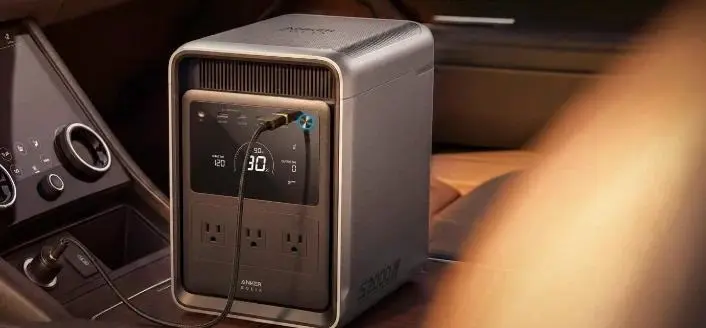
A battery changes the arithmetic. The Anker SOLIX S2000 supports up to 35 hours of refrigerator backup through OptiSave, which covers the usual outage and most of a long one, and 2,010Wh is enough to keep a second fridge or a chest freezer alive alongside it. Run it on the fridge circuit rather than through an extension cord, because a compressor pulls a surge at every start, and plug it in before the storm so the first run is not the first attempt. A second unit for the freezer is not extravagant if the freezer holds a season of meat. Order matters at the socket: the biggest compressor goes on first, while the unit still has headroom to spare.
Food Safety Decisions
Temperature Thresholds
Four degrees Celsius is the line for the fridge and minus eighteen for the freezer, and both are printed inside the door in the one place nobody looks until it matters. Above those, bacteria multiply quickly and the clock starts. A thermometer in the door tells you where you are without opening anything, and it turns a judgement call into a reading. Write the hour the power failed on a note, so the two-hour rule becomes a calculation rather than a guess. Mark the note with the hour and the reading together, so the pair tells you the trend rather than a single point. A note on the counter beats a memory of an hour that nobody agreed on.
What to Discard
Anything that has been above the line for more than two hours goes, along with anything that smells wrong, looks slimy or has been sitting in meltwater. Meat, dairy, cooked rice and prepared salads are the first to go; hard cheese, bread, fruit and unopened jars usually survive, and a freezer can be refrozen if it still has ice crystals. Cook what is about to spoil if you can cook without the grid, and photograph the bin, since some policies ask for proof. The rule is cheaper to apply than to argue about, and it protects people rather than shopping. Anything in a sealed jar is judged by the lid, and a lid that has popped is a lid that lied.
Conclusion
Know the hold time first; everything else is an extension of it. Ice buys hours, a battery buys a day, and a thermometer tells you which of the two you actually needed. None of it is expensive, all of it has to be arranged before the wind arrives, and the food that survives is the food that was packed in advance. The two hours are short, the thermometer is cheap, and the decision is already made once the reading is in front of you. A thermometer in the door costs less than the food it protects, and it ends the argument at the sink.
- https://bestpickuplins.com/usb-hub-vs-usb-c-docking-station-which-one-is-right-for-your-setup/
https://bestpickuplins.com/budget-audiophile-real-hi-fi-from-a-headphone-amp-without-the-overspending/
https://bestpickuplins.com/hiss-crackle-and-weak-sound-signs-you-need-a-headphone-dac/